The Difference Between Fuel Economy vs. Fuel Efficiency

If you’re looking for fuel-efficient or light-duty vehicles, chances are that you know the basics of fuel efficiency and fuel economy. However, many people don’t have an in-depth knowledge of these concepts, and few take the time to explain them fully. Let’s compare fuel economy vs. fuel efficiency and show you how you can boost fuel efficiency and economy for your vehicle.

Little Germany of Tucson is your local European vehicle expert. We are a proud Tucson BMW service company that happily helps our customers boost their vehicles’ potential. If you need help with anything, call us at (520) 881-3273.

What Is Fuel Economy?

Fuel economy is an objective measure of how far your vehicle can drive on a gallon of gas. In the United States, we measure this with miles per gallon (MPG), while other nations measure it with kilometers per liter or liters per 100 kilometers. In the U.S., the higher the MPG, the better your vehicle’s fuel economy.

As vehicle technology improves, newer cars can run farther on a gallon of gas compared to older vehicles of the same model. This efficiency is grounded in the efforts of manufacturers to reduce their carbon footprints.

How to Boost Fuel Economy

Fuel economy is almost exclusively an engine problem. As such, you must keep your engine in top shape by regularly changing your sparkplug, maintaining your gaskets and valves, and checking your fuel injection system.

What Is Fuel Efficiency?

When comparing fuel economy vs. fuel efficiency, it’s essential to distinguish the two. While fuel economy is a direct measure of the efficiency of your engine and car, fuel efficiency is an overview of how well your vehicle uses that fuel. Many things besides the engine affect your fuel efficiency, such as:

  • Vehicle weight
  • Horsepower
  • Valve timing
  • Idling
  • Any speed-boosting tech (superchargers or turbocharges)
  • Fuel injection technology

How to Boost Fuel Efficiency

Since fuel efficiency is easier to define, there are a few ways to improve it. For example, regular vehicle upkeep is vital to its fuel efficiency, as well as reducing the overall weight from time to time. Don’t constantly haul people and heavy stuff, and you’ll watch your efficiency soar.

In addition, keep your tires in good condition; poorly-maintained tires increase friction, which reduces the overall efficiency of your vehicle. Keeping them full of air at all times is essential.

Boost Overall Performance at Little Germany

Your vehicle’s performance is paramount to its lifespan. It will likely last you a long time if it’s efficient, and it will be cheaper on fuel.

Besides debating fuel economy vs. fuel efficiency, you need to take care of the non-fuel-related areas of your car. Every car owner should learn the importance of changing brake fluid to keep their vehicle performing better for longer.

We believe in providing value to our customers. If you’re ready to boost the performance of your European car or need a service, call Little Germany of Tucson at (520) 881-3273 to schedule an appointment.

How Important Is It to Change Brake Fluid?

Do you ever hear a squealing song when you hit the brakes in your BMW? Is your car not stopping as quickly as it used to? BMWs are precision-engineered vehicles, but if their brakes fail, they become a danger on the road and a potential source of tens of thousands of dollars in repair costs.

If you own a BMW in Arizona and want to enjoy driving your car safely, put your trust in Tucson’s trusted BMW service by Little Germany Inc.

How important is it to change brake fluid? Let’s talk about it.

What Is Brake Fluid?

Brake fluid is a type of glycol, most commonly glycol ether. Glycol ether is a viscous liquid that transfers pressure within the hydraulic brake system. It fills the brake fluid reservoir and connects to the master cylinder.

The Role of Brake Fluid

When a driver pushes down on the brake pedal, the pressure moves the brake fluid through the brake lines until it applies pressure to the brake calipers. The brake calipers apply pressure to the brake pads against the rotors, which attach to the wheels.

The force on the brakes produces friction that slows the rotation of the wheels, bringing the vehicle to a stop. Brake fluid does not compress much under pressure, meaning that it has to push something out of the way when you press on it.

The Dangers of Old Brake Fluid

Brake fluid can pick up water and contaminants from the air or corrosion within the hydraulic system. If brake fluid becomes dilute, it will no longer transmit energy as effectively to the brakes. The driver would have no other choice but to stop the car without the hydraulic brake system.

How important is it to change brake fluid? Consider what happens when brakes fail.

If your brakes fail suddenly while on the road, shift into a lower gear and apply the parking brake. Put on your hazard lights to warn other drivers and find a place where you can pull to the side of the road.

The best way to avoid having to perform such a risky maneuver is to keep your brakes in good condition and change the brake fluid frequently.

How Often Should You Replace Brake Fluid?

Different parts of the brake system have varying lifespans. The master cylinder, for instance, can last for well over 100,000 miles, while the brake pads and brake rotors might need more frequent replacement. Responsible BMW owners should understand how to maintain the brake system so that they can reap the full benefit of BMW’s exquisite engineering.

Experts advise motorists to change the brake fluid every two years.

Specialized Brake Repair and Replacement for Euro Cars by Little Germany Inc.

Owners of European cars, particularly BMW owners in the Tucson, AZ, area know they can count on us for professional advice and quality servicing. Learn whether or not Euro cars are better than American cars. Have your BMW questions, such as, “How important is it to change brake fluid?” answered by calling 520-881-3273 today.

Are European Cars Better Than American Cars? What are the Main Differences?

The argument on whether European cars are better than American cars (and vice versa) is one of the oldest debates around. It’s probably as old as the chicken and egg or milk and cereal debates.

The truth is, like those other unending debates mentioned above, there’s no correct answer to “are European cars better than American cars?” Motor vehicles on either side of the divide will win or lose on specific metrics. The right choice will come down to your situation.

As a trusted car repair company in Tucson, we’ve seen it all and can offer the proper guidance. We’ll look at the main differences between European and American cars with a few talking points.

The Main Differences Between European and American Cars

Affordability

American vehicles are cheaper than European cars. The parts and engineering in European vehicles are largely superior. Therefore, they cost more. There are a few reasons for that, including more stringent manufacturing rules and a more robust manufacturing landscape.

However, many will argue that the parts and engineering superiority don’t matter if you are simply looking for a car to take you around for a few years.

Maintenance Needs

American cars are lower maintenance than European cars. Parts are always available. You may need to wait longer for a replacement part on a European car.

There are also significant differences in general maintenance costs. You can expect to pay 40-50% more on maintenance for European cars.

Car Size

American cars are bigger than European cars. The average American loves family road trips, and why not? There are over four million miles of roads to explore.

American cars are a good fit for families constantly on the road. European cities are smaller, and roads are more compact. Therefore, manufacturers don’t see any value in making cars as big.

Value for Money

If you don’t mind the whistles and bells in European cars (and the overall aesthetic appeal), American cars generally offer more bang for your buck.

For example, a seven-seater 2019 Mercedes-Benz GLS costs $90,000. An eight-seater Ford Expedition from the same year costs $52,000—almost 60% less!

Aesthetic Appeal

In our experience, people ask, “are European cars better than American cars?” after seeing promo images of European cars.  

European cars are always more stylish compared to American models of the same year. European designs combine elegance, style, and sophistication.

Fuel Efficiency

European car manufacturers make vehicles that can pass the stringent fuel economy checks in many countries across the continent.

With soaring gas prices, the gas engines of European cars beat the gas-guzzling engines in American units.

Longevity

Since European cars have better costlier parts, they tend to last longer than American cars. However, that’s assuming similar use cases and proper maintenance.

The longevity explains why used European cars always cost more than American alternatives.We hope you have a better sense of direction after this article on “Are European cars better than American cars?” Are you considering going European? Check out these pointers before buying European luxury cars. You can also call us at 520-881-3273 for more guidance.

What You Should Know Before Purchasing European Luxury Cars

European luxury cars are a popular choice for the conscientious car owner. However, you should know that these luxury cars need specialized care to maintain precision engineering. Contact Little Germany to work with experienced European luxury auto repair technicians in Tucson.

Below is everything you need to know before purchasing a European luxury car.

High-Tech Electronics

Luxury sedans like those from Mercedes Benz are known for having modern amenities, but did you know that not every technician has the appropriate tools or training to handle some of the newest additions to luxury vehicles? Standardized equipment for luxury cars can include:

●       Wireless electronic monitors

●       Wireless cameras

●       Automatic braking

●       Automatic windshield wipers

The list above is only a small sampling of automotive manufacturers’ increasingly complex equipment in high-end luxury vehicles. In addition, each electronic component requires a high level of experience and knowledge to appropriately maintain and repair when necessary.

Advanced Engineering and Fuel-Efficiency

Perhaps you wonder why European V8 engines sound different from American ones. Part of the answer lies in the type of crankshaft that the V8 engine uses to push the engine pistons, and European V8s prefer the flat-plane crankshaft, which changes the firing order.

By slightly changing the firing order, European engines have a smoother sound with the additional benefit of improving the response time to acceleration demands. Vehicles like the Aston Martin or Mercedes S Class are well-known for the power and class that these engines provide.

The increased fuel efficiency of European luxury cars and sports cars is due to their high-quality spark plugs and well-tuned specifications. However, this means that only qualified technicians can perform the maintenance schedules that European luxury vehicles require.

High-End Design

Whether you own a luxury car for personal use or depend on luxury car rentals, you know that you pay a premium for the best materials and features. These luxurious designs and high-end features make life simple while maintaining a beautiful appearance.

The high-end materials that manufacturers use in their luxury lines demand more respect and attention than more cost-effective fabrics and other features. When your luxury vehicle needs expert attention, you can only trust a specialized automotive repair center to perform the work.

Quality European Luxury Car Care in Tucson, AZ

Since European luxury manufacturers produce vehicles with advanced components, these cars depend on expert knowledge and experience to keep them in shape. Little Germany in Tucson has highly trained technicians, software tools, and on-site OEM parts to provide timely repairs.

Typical mechanic shops that don’t specialize in luxury vehicles won’t have the proper diagnostic equipment or training to provide the care your high-end vehicle needs. Bring your European luxury or sport car to the professional European car repair center when your vehicle needs maintenance or repair.

Explore our European car brands guide to learn more about BMW, VW, Mini, Audi, and other top-of-the-line luxury brands. Schedule services for European luxury cars by calling Little Germany in Tucson at 520-881-3273.

What Are Aftermarket Parts: Are They Reliable?

Dealing with car problems can be stressful and expensive. Even beyond the costs of repairs, the situation can lead to additional expenses for transportation or missed work. Therefore, many car owners choose to reduce the cost of their repairs by using aftermarket parts instead of original equipment manufacturer (OEM) parts. If you’re wondering, “what are aftermarket parts?” this article will answer that question and help you determine whether they’re right for you.

Regardless of the type of parts you choose, Little Germany, Inc. is an excellent option for anyone searching for auto repair technicians in Tucson. With years of experience servicing a wide range of cars, Little Germany, Inc. is proud to provide effective and affordable auto parts installation and collision repair services to the residents of Tucson, AZ.

What Are Your Choices?

When damage to your vehicle requires the mechanic to replace components, you have two different options for where to get those auto parts. The first option is to purchase the piece directly from the original equipment manufacturer. While this guarantees that the component will be identical to the original part, it is an expensive option.

For car-owners interested in saving money on the cost of their repairs, aftermarket car parts are a compelling option. These components are produced by third-party companies, resulting in a far lower price point. Although these companies strive to deliver parts as close to the original equipment as possible, these components sometimes do not fit as well as OEM parts.

Factors to Consider

Now that you know the answer to the question “what are aftermarket parts,” it’s time to determine whether they’re right for you. The following sections of this outline will provide some important factors to consider before choosing between OEM parts and aftermarket options.

Cost

Although we’ve discussed it briefly, aftermarket parts typically represent a significant discount over OEM options. Because there’s a lot of competition, costs to the consumer remain low. The cost difference between OEM parts and aftermarket ones is often significant enough to reduce the entire repair costs by a meaningful amount.

Availability 

When your primary vehicle is damaged or inoperable, you must prioritize urgent repairs. If the parts you need are back-ordered or out of stock, aftermarket parts may help you get your car back on the road faster. Multiple manufacturers produce these parts, so they are rarely unavailable.

Safety

With anything involving a vehicle, safety is the highest priority. While saving money is always nice, the most important thing is to have a safe vehicle for you and your family. Fortunately, most aftermarket parts are exterior panels or fenders, which offer equivalent safety to OEM options when installed by a skilled mechanic. However, it’s always wise to ask your mechanic about the quality of an aftermarket part before committing to installing it.

Get Help Today

This article helped you answer the question, “what are aftermarket parts?” but if you want to learn how much it costs to fix a BMW or have other questions, please continue exploring our website. However, if you’re ready to schedule repair service in Tucson, AZ, call Little Germany Inc. at 520-881-3273 for quality repair services.

6 Common Volkswagen Problems Every Owner Should Know

Due to similar manufacturing processes and designs, specific car models tend to suffer similar mechanical issues after prolonged use. Volkswagen owners often complain of oil leaks, exhaust smoke, and suspension problems. 

Are you looking for Volkswagen repair professionals in Tucson? Little Germany, Inc. is a family-owned business specializing in European car repairs. Here are the six most common Volkswagen problems car owners face. 

Problem #1: Oil Leaks

Volkswagen owners who fail to get oil changes regularly experience oil sludge accumulation in the engine, which can cause leaks. An illuminated check engine light is often the first sign of an oil leak or electrical problem. 

Oil leaks can also cause clogs in the crankcase breather system, stopping the engine from correctly ventilating excess pressure. It is best to service your car as soon as you suspect an oil leak. 

Problem #2: Coolant Leaks 

Coolant leaks are common in Volkswagen water pumps, radiators, and coolant hoses. Your vehicle’s seals and internal bearings are likely weak and need repairs if you experience a coolant leak. The radiator could also be the issue if you notice liquid under the car. 

Coolant leaks can cause your engine to overheat quickly. Schedule an appointment with Little Germany, Inc. to avoid further damage if you notice a leak. 

Problem #3: Exhaust Smoke

Do you notice excessive smoke coming from your car’s exhaust system? Many Volkswagen owners experience exhaust smoke issues. An engine block or damaged head gasket is likely the problem. A coolant leak is often the first visible sign of a cracked engine block or gasket issue. 

Problem #4: Clock Spring Problems

Unfortunately, clock spring issues are among the most common Volkswagen problems. Clock springs allow your car’s steering wheel to move, so these issues can quickly become dangerous. Many clock springs last for a decade or longer, but the wires in these parts tend to become brittle in Volkswagens over time. 

It is also common for clock springs to loosen if an inexperienced technician incorrectly installs the steering wheel after serving the vehicle. 

Problem #5: Suspension Issues 

Your Volkswagen likely has a suspension problem if you notice clicking noises emitting from the vehicle while turning or going over bumps. Faulty ball joints often cause suspension problems in Volkswagen automobiles. 

It is essential to call an experienced car repair technician if you notice unnatural vibrations or clicking noises to prevent further deterioration of your suspension system. 

Problem #6: Electrical Problems 

Electrical problems, such as battery shortages, are common in many Volkswagen cars. Starters or alternators often cause electrical issues in Volkswagens. Visually inspect your battery if you are experiencing electrical problems. 

Electrical components in newer Volkswagens may break down after four years or less, while starters in older models last much longer if the car does not overheat. Are you experiencing Volkswagen problems, or do you need to replace your car’s fuel injector or spark plugs? Little Germany of Tucson specializes in repairing the worst Volkswagen cars, including certain Jetta, Passat, and Phaeton models.

7 Worst VW Cars in Terms of Problems and Complaints

Volkswagen wants to be a major car brand in the U.S., up there with Honda, Toyota, Ford, and Chevrolet. The classic, original Volkswagen Beetle left a remarkable impression. However, there have been a lot of VW models that were just bad.

Hopefully, you don’t own one of these, but we can fix it if you do! Call (520) 881-3273 or come by Tucson’s reliable Volkswagen repair experts, Little Germany, Inc., at 5235 E. Speedway.

Here are seven of the worst VW cars:

2009 Jetta

CarComplaints.com lists the 2009 model as the worst Jetta year model of them all—and as you read on, you’ll realize that that is really saying something. Most complaints cite either “engine failure” or “brake problems.” The former stem mainly from stalled engines and broken turbos. The latter is primarily failing ABS modules.

2006-2008 Jetta

Any discussion of the worst Volkswagen made includes the “fancy looking, cheap build” 2006-2008 Jettas. All they have going for them is design. The 2.0L turbo engine is a non-conventional “Dual Mass” flywheel. The transmission makes rattling noises when the car turns off. Drivers also report that the reverse gear often fails.

2006 Passat

The VW Passat is one of the worst VW cars because it idles roughly and requires way too much preventive maintenance, particularly to components around the timing belt, just to keep the engine in good condition. This is just too many issues for a small vehicle.

2003 Jetta

The 2003 VW Jetta is among the worst Volkswagens. Its stroke engine smoked most of the time, and the car always seemed to need oil. The fuel tank sat over the top of the engine, relying on gravity to do most of its job. Take the word of our experts at Little Germany, Inc. and avoid this car.

VW Golf (Mark IV Edition)

While not a horrible car, the VW Golf (Mark IV Edition) was unreliable and unattractive and continues to haunt VW to this day. Originally designed in the 1970s to appeal to hatchback lovers, this compact car has its share of engine problems, including ignition failures, spark plug problems, and rough cold starts. With an outdated appearance and some issues under the hood, this isn’t the best than VW has to offer.

2002 Passat

Would you be interested in a “fancy looking, but cheap build” sedan? Car buyers didn’t either. All this car has going for it is that it’s nice to look at. It guzzles gas, scratches easily (inside and out), needs frequent re-alignments, and is just slow.

VW Phaeton

Volkswagen can design premium-class machines well. The Phaeton, however, is not one of those success stories. Although the Phaeton is a decent piece of technology, its small limo design can’t compete with more high-end Mercedes or BMW models. Car aficionados call the Phaeton a “classic lemon,” one of the worst VW cars.

For top-quality, reliable maintenance and repair for your VW, Audi, BMW, or Mini-Cooper, call or come by Little Germany, Inc., 5235 E. Speedway, phone (520) 881-3273.

Next: Learn more about Volkswagen Passat’s common problems.

Audi 2022 Models and Updates for USA

The new line of Audi 2022 models shows a significant expansion of the brand’s battery-operated and electric vehicles, aligning with their commitment to achieving net carbon dioxide neutrality by 2050. It also coincides with Audi’s promise to start 2022 with more battery-operated and electric vehicles available in the US than any other car manufacturer. 

Audi car owners know you can’t trust just anyone to provide proper maintenance and repairs, which is why so many rely on getting their Audi mechanic services in Tucson from Little Germany. Our skilled technicians have mastered the meticulous engineering of the Old World, making us the number one European auto repair shop in the area. We service Audi 2022 models and prior releases at affordable prices. 

Here’s a look at the changes you can expect on the Audi 2022 models.

2022 Audi A3/S3/RS 3

The Audi A3 is a new luxury sedan featuring mild-hybrid technology, a 48-volt battery system, and powertrain capabilities. Its sibling models offer more powerful engines, with the Audi RS 3 having a claimed speed of 180 mph. 

2022 Audi A4/S4 

The Audi A4 sedan now offers a Black Optic design package on the A4 40 TFSI trim model. Additionally, sport suspension is standard on the A4 45 TFSI model, and the S4 now comes with carbon fiber inlaid rings.

2022 Audi A5/S5 

Upgrades to the 2022 Audi A5 include options for 19-inch tires and a Black Optic design package. Additionally, sport suspension is now standard on high-end models.

2022 Audi A6/S6  

The 2022 Audi A6 has an improved infotainment system. Upgrading to the premium trim includes a 10.1-inch Multi Media Interface and access to Audi’s display system Virtual Cockpit Plus. Additionally, buyers can select the Black Optic design on the Audi A6 45 TFSI.

2022 Audi A7/S7 

The 2022 Audi A7 hatchback has been updated with a larger Multi Media Interface that comes with Audi’s display system Virtual Cockpit Plus. Both the A7 and S7 models now come equipped with direct tire-pressure monitoring and rear side airbags.

2022 Audi E-tron 

These battery-operated and electric SUVs are mostly unchanged; however, two new options have been added: Audi E-tron S and E-tron S Sportback. Upgrades on the Prestige trim include driver-assist technology and 22-inch sport tires.

2022 Audi Q3

The 2022 Audi Q3 now comes standard with the latest MIB 3 infotainment display system, which offers Amazon Alexa and other personalization options. Other standard features include blind-spot alerts, rear alerts, and parking assistance. A camera system with various angles is now optional with the Premium Plus upgrade.

Audi Q4 E-tron  

The new Audi Q4 E-tron model lineup is Audi’s latest addition of battery-operated and electric crossover SUVs. They come equipped with 5-W-Spoke Aero design wheels, have room for up to five people, and can tow 2,600 pounds when equipped with the proper gear. 

2022 Audi Q7/SQ7 

The 2022 Audi Q7 comes standard with rear-side airbags, power-folding external mirrors with heating memory capabilities, a tire-pressure monitor, and ambient lighting inside the vehicle. ACC and lane assistance are now standard features on the SQ7 model.

Before you commit to any of the new Audi 2022 models, learn what common Audi problems you can expect to experience. If you’re having trouble with your vehicle, call Little Germany now at 520-881-3273 to learn more about our European car services available in the United States. 

4 Common Audi Problems: Causes and Solutions

Audis, with their sleek bodies, smooth interiors, and fast engines, are amongst the best luxury vehicles on the market. Despite their reputation for reliability, these vehicles are subject to wear and tear, just like other cars. Although the automaker uses premium quality materials in the construction of their vehicles, sometimes these parts fail. As an Audi owner, it’s important to know the potential problems you can encounter. 

Here are some of the most common Audi problems tend to face:

Problem # 1 Oil Leak Issues 

Perhaps one of the most common issues in Audis are oil leaks, which stem from degraded engine gaskets and faulty seals. Seals or valve covers excrete oil from the car if punctured, damaged, or have become worn over time. When oil leaks resulting from faulty seals occur, you’ll likely notice oil stains from underneath the car. Replacing the seals will typically stop the oil leak. 

What about oil leaks from engine gaskets? Gaskets are critical components that significantly contribute to the vehicle’s performance. Valve malfunctions cause oil leaks from the engine gaskets. This problem is common in older Audi models.

Problem # 2 Problems with Electrical Components 

Audi’s are susceptible to minor electrical issues. You might experience fluctuating problems with your brake light. The motor in your power windows may go out, which means you won’t be able to let your window up or down until you replace it. 

Electrical issues can also cause problems with the LCD screen on the front console. In most cases, electrical problems in Audis result from blown fuses, damaged wiring, or a faulty control module. The good news is that Audi offers a warranty on these electrical components, so you don’t have to pay out of pocket.

Having your vehicle inspected by one of the skilled mechanics for Audi in Tucson is imperative for an accurate diagnosis. 

Problem # 3 Ignition Component Failure 

Ignition coil failure is another prevalent issue seen in Audis. Premature ignition coil failure occurs from worn spark plugs. If your engine is misfiring, chances are you need a new ignition coil and spark plugs. You’ll want to get this problem checked out right away because when left unchecked, the engine will eventually stall – and there’s nothing worse than being stranded. 

You can prevent ignition coil failure by opting for OEM spark plugs that are specifically designed for Audis. Don’t forget to have your mechanic tune your car’s engine to the factory specifications so that the spark plugs don’t wear from excessive engine heat. 

Problem # 4 Worn Timing Belt 

Timing belt problems result from normal wear and tear in a well-maintained Audi. We recommend repairing a worn timing belt sooner rather than later. If the timing belt completely snaps while driving, it can damage the pistons, significantly increasing the overall repair cost. 

Are you having problems with your vehicle? Here at Little Germany, we are the number one Audi repair technicians in Tucson. Contact us at 520-881-3273 to learn more about European car services

How Much Power Steering Fluid?

car power steering fluid

Power steering is a standard feature in vehicles today. Unlike the older models, cars with power steering need a lubricant such as power steering fluid for a smooth operation. This is due to the moving parts which create friction during operation. Without lubrication, it can cause premature wear and tear in the internal components.

The car power steering fluid is essential for the performance of your car. It makes turning your car easy and also helps during tricky maneuvers. But, driving without the fluid can ruin the power steering pump leading to friction and heat.

Over time, it can damage your power steering unit, leaving you with expensive repairs. This is why you need to keep track of your fluid levels and do a fluid change as and when needed.

This article has everything you need to know about power steering fluid. Keep reading to know more about how and when to change the fluid, and more.

What is a Power Steering Fluid?

Power steering fluid is nothing but a hydraulic fluid used in the steering system. It helps create a hydraulic link between the front wheel and the steering. As a result, the fluid helps to build and transfer pressure quicker and with much less effort. This reduces the effort required to turn the wheel. Moreover, it also lubricates the moving parts and prevents corrosion.

As a critical component of your car, power steering helps make the driver’s job easier. The fluid provides hydraulic assistance to the system when you turn the wheel. This makes it easy to control your car, especially in tight spots. Without the assistance, turning will require a significant effort from the driver.

What are the Different Types of Power Steering Fluid?

Power steering fluid ensures that the pump, piston, valve, and hose works in an optimal condition. It keeps the power steering system functioning best for easy and smooth rides.

Below are the three common power steering fluids available in the market. Each one of them has different properties and will vary depending on the car.

Automatic Transmission Fluid (ATF)

Some cars accept the transmission fluid used in automatic transmissions for steering systems. In this case, you can use Mercon, Dexron, Type-F, and ATF+4 for your power steering.

Older vehicles made in the 1970s-1990s take ATF transmission fluid for their power steering. This includes Ford, Chrysler, GM, and Volkswagen(built in the US).

Synthetic-Based Hydraulic Fluid

Many vehicles, especially European and Japanese-built, have different standards than in the US. These vehicles require a high-performance synthetic fluid to meet their standards. It flows well even at low temperatures increasing the pump lubrication.

This includes European-built vehicles such as Volvo, Porsche, Volkswagen, Audi, and BMW. The standards also depend on the make and model of the vehicle. The same goes for Japanese brands such as Nissan, Toyota, Mitsubishi, Honda, and Subaru.

Universal Power Steering Fluid

Modern vehicles also accept the universal power steering fluid. But, they require special additives to increase lubrication and corrosion protection.

Note: An incompatible fluid can cause untold damage to the system. So, refer to the owner’s manual for the power steering fluid suitable for your car.

When Should I Change the Power Steering Fluid?

The rule of thumb is to replace the power steering fluid at five years or 50,000 miles, whichever comes first. Power steering fluid is generally present in a clean environment. Hence it lasts much longer than any other automobile fluid. However, most manufacturers do not specify a set period to change the fluid.

mechanic hand car Power Steering Fluid

After the time mentioned above, the fluid tends to break down. You may even notice contamination which in turn affects the hose and power steering pump. Moreover, the anti-corrosive additives also begin depleting. This, combined with the increased temperatures, can cause the fluid to oxidize. Also, if the fluid appears dark or dirty, change it as soon as possible.

The role of the power steering fluid is to provide lubrication. If it takes debris and water, it’s not as efficient, which may harm the system. In addition, old fluid in the power steering pump can generate noise and fail in the end.

How do You Know if You Need Power Steering Fluid?

Power steering fluid is a must-have for a pleasant and safe drive. However, if you hear any noise or feel a jerk, your fluid may be to blame. The following are some of the warning signs that you’ll need to replace your power steering fluid.

  • Power steering fluid is pretty clear with a tinge of amber, red or pink color. If the fluid in your system is black, dark brown, or foamy, you’ll need to replace, as early as possible. It’s likely been contaminated with debris from the connecting hoses, O-rings, or seals.
  • Much like any other fluid in your car, the power steering fluid also collects debris and moisture. At this stage, you can hear a whining noise from your pump.
  • A shrieking sound during steering signals low power steering fluid levels. This indicates that you may leak somewhere. Since the steering fluid is in a sealed environment, leaks can cause a low fluid level due to leaks.
  • If your steering wheel is jerking when you turn left or right, it indicates a low power steering fluid level. Another indication of the low fluid level is difficulty in turning the wheels.

Replacing the power steering fluid is much cheaper than having to change the pump. Visit your auto mechanic and determine the best plan to change the power steering fluid in your car.

How Long Can You Drive with Low Power Steering Fluid?

It is not safe to drive your car with low-power steering fluid. However, nothing stops you from driving in the meantime.

Power steering fluid is used in the steering unit to lubricate and dissipate heat. Without it, the pump will seize, which will cause the belt to fail. Over time, your overheated engine will stop working, and so will the battery.

In other words, it is safer not to drive your car with low fluid levels. And if you have to drive, ensure that it is to an auto repair shop to change the power steering fluid.

Is it Bad to Drive with Low-Power Steering Fluid?

Yes! It is not safe and a terrible idea to drive with a low fluid level.

Driving your vehicle for an extended period without the steering fluid can be bad for your car. First and foremost, your driving quality will be affected. Second, while your steering still works, you will find it laborious to turn. Forget about parallel parking or driving in traffic.

A small leak isn’t a concern, but the possibility of getting worse is a huge problem. When you keep driving with a leak, you risk the chance of it getting bigger, and you will lose all your fluid fast.

If you continue using your car, you risk damaging your steering system. Once this fluid level drops, you have not only the dry pump on your hands but also high levels of heat and friction. Combined, this can lead to hefty repairs costs.

If you have no way but to drive without power steering fluid, ensure that you do not make any right or left turns.

How do I Change the Power Steering Fluid?

Manufacturers suggest flushing the steering fluid every 50,000 miles for good results. A power steering flush involves draining the vehicle’s power steering fluid and cleaning before adding the new fluid. If your power steering fluid is below the recommended value, it is time for a top-up.

Replacing the power steering fluid is not one for a beginner. It’s a long and precise process that requires the expertise of a professional. Consult your service center or mechanic for a fluid flush.

If you are in a pinch and not afraid to get your hands dirty, follow the below steps to drain and change the fluid.

Locate the Power Steering Fluid Reservoir & Pump

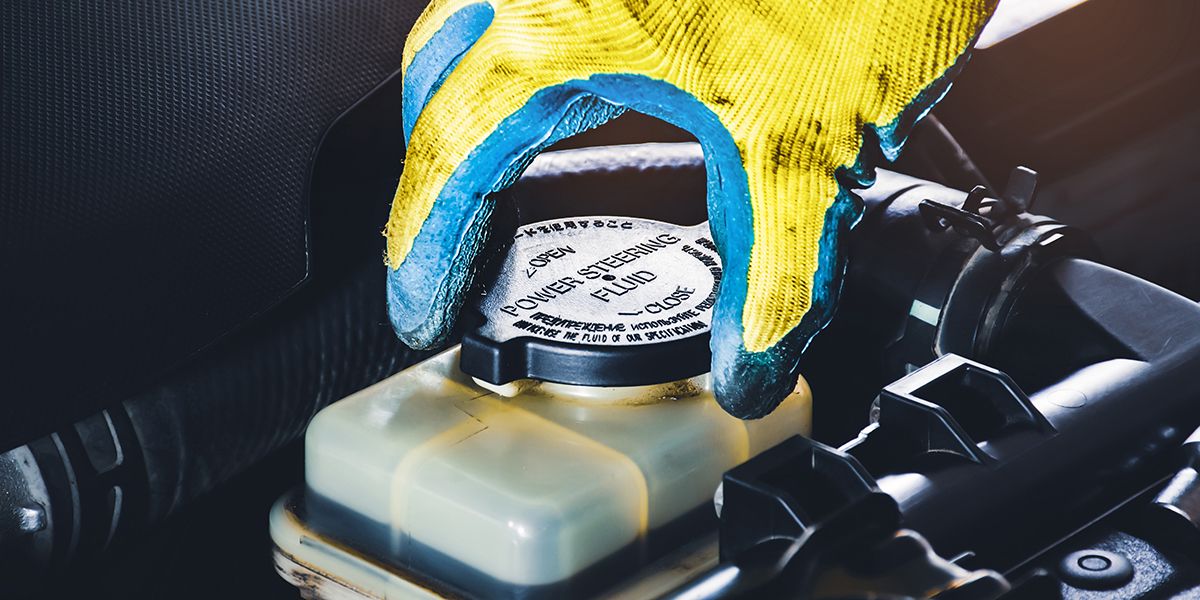
To start with, you need to locate the power steering reservoir and the pump. The power steering pump sits on one side of the engine, driven by a belt. On the other hand, the reservoir is generally located near the engine on top of the pump. It is a clear container with a black cap.

Newer vehicles have the reservoir mounted on the inner fender due to less space. Make sure your car is switched off until you are taking action to check your fluids.

Remove the Cap

Wipe away the dirt and debris surrounding the reservoir cylinder. This is done to prevent the debris from contaminating the fluid. Then, loosen the lid over the reservoir.

Use a dipstick (FULL or ADD/LOW) to check fluid quantity. Your car should contain the same percentage of fluid over the years. However, when your vehicle becomes older or a leak somewhere, you could find a low fluid level.

If you suspect a leak, you may want to investigate before you add fluid. Some leaks, such as a rack and pinion leak, can be plugged with pour and go products.

Add More Fluid

If the power steering is low, add more fluid until it reaches the “FULL” mark on the power steering reservoir. Keep in mind that the fluid expands at high temperatures, so you may have to adjust as needed. Also, depending on the make and model of your car, you may have different markings as HOT or COLD.

Take care not to overfill the reservoir with fluid. Otherwise, it can start leaks, especially if there isn’t enough room at the reservoir cylinder when it expands.

If the fluid is dark and foamy, you may want to change power steering instead of replacing it.

Drain the System

Disconnect the hoses from the steering rack and drain the power steering fluid into a vessel. Even though drained, some fluid may be trapped inside. Therefore, you need to flush the fluid out before adding the new fluid.

Reconnect the system except for the return hose. Add a small quantity of the new power steering fluid. When you turn on the vehicle, the pump will push the old fluid along with the return hose. Again catch them in a container. Keep on rotating the car’s steering wheel until fresh fluid can go through.

mechanic adding car power steering fluid

Add Power Steering Fluid

After the old fluid has come out, you can reconnect the return hose. Add fresh power steering fluid steadily until you reach the correct fill level. Make sure you’re only using compatible products for your vehicle.

Start your car and rotate the steering wheel to both rights and left several times. It helps to bleed the fluid throughout the power steering wheel. Add more fluid if the level falls. Next, screw on the lid firm and tight before your close the hood.

How Much Power Steering Fluid does my Car Need?

There is no defined volume of fluid for the power steering system. It differs based on the make and model of the car. The issue you will face here is that cold fluid has a smaller volume than warm fluid.

Check if your vehicle has a hot/cold marking. If so, you can fill up to the cold marking and let the pump do its work.

Most cars will have a dipstick or a transparent fluid container to help ascertain the fluid left. This should help you find the max volume.

If you fill a vehicle up to the maximum with cold fluid, the fluid may overflow when it’s warm. The best option for these power steering tanks is to fill above the minimum threshold. Then turn off the engine and test how far the fluid rises after the car warms up. You can add more fluid incrementally until you reach the proper level.

As for the power steering fluid, you’ll need 1 liter if you are topping up. And, you’ll need 2-3 liters for a complete power steering flush.

What Happens if I Overfill my power steering?

Overfilling your power steering fluid doesn’t harm your steering system. But it can have other adverse consequences.

As the fluid is heated, it expands, and the excess fluid will be discharged from the filler cap. The spilled over fluid gets in your engine compartment, which is not ideal.

The best thing you can expect is a massive mess in your engine bay. The worst thing that can happen is the fluid can get into heating elements of the engine, such as the exhaust. The fluid combined with the heat can start a fire.

The only other thing that can happen is that the fluid goes in your belt. This results in your belt being damaged and dropping or even destroyed.

What if I Don’t Put Enough Power Steering Fluid?

Insufficient steering fluids can cause severe damage to the hydraulic power steering system. Without enough fluid, it will cause friction leading to heat damage and excessive wear and tear. Over time this can damage your steering rack and require expensive repairs.

When the power steering fluid is low, it allows air to enter the system. The combination of both leads to power steering problems. And if not repaired right away can cause the entire power steering unit to get damaged.

A new power steering system may cost somewhere between $200-$350. And the labor costs will be $50 and $125 per hour. Finally, add in costs for damage to hydraulic piping and seals you may have an overall bill of at least $500.

Power steering fluid or automatic transmission fluid?

mechanic opening car power steering fluid cap

Both power steering fluid and automatic transmission fluid are hydraulic fluids. The advantage ATF fluid has over the former is that it has detergents and friction modifiers. These additives help keep the unit clean. However, it can also harm the hydraulic valves of the power steering system and pump.

Some power steering systems require power steering fluid, while others use transmission fluid. Your car owner’s manual can help determine the right fluid for your vehicle. Some cars have the same information on the reservoir cap too. If everything fails, call the dealership, and they can guide you.

The short answer, you can use transmission fluid in the place of power steering fluid in a pinch. However, should your manual forbid it, it is better not to. The wrong fluid can cause the power steering unit and its seals.

Conclusion

Power steering fluid is essential for the smooth functioning of the steering wheel and needs replacing when the levels are low. In the same line, you should replace it if it starts to lose its nature. Dark foamy fluid should be replaced as soon as possible.

Car owners are advised to monitor the power steering fluid level at regular intervals. However, the intervals vary depending on the car and also the driving conditions.

Ensure that you use the suitable power steering fluid depending on the make and model of your vehicle. The wrong fluid could have a severe reaction with the existing fluid, causing an acidic reaction. It can also lead to a complete power steering failure. Above all, it could also be missing essential additives leading to premature leaks.

For over 45 years, Little Germany is a certified Service Center that specializes in full service and repair services for German-made cars such as the BMW E36. Contact Little Germany for all your auto repair needs. If you need service after our normal business hours, please fill out our After-Hours form.

CS Design Studios - Web Design Tucson
Copyright © - Little Germany Tucson